A few weeks ago, I stepped out of the house and headed toward town, not expecting much more than an ordinary errand. But as I reached the car, something caught my attention. You see, alongside our driveway runs a ditch that, after a good rain, turns into a small creek. Standing beside that is a tall sycamore tree—probably fifty feet high, give or take. That day, a steady breeze was blowing, and the air was full of motion. For a moment, it almost looked like it was raining—but not water. It was raining sycamore seeds.
They drifted through the air, carried along by the wind, landing wherever the breeze decided to take them. Over the next few days, I noticed those seeds scattered everywhere—on the driveway, the sidewalk, the roof, and even resting on top of our cars. But of course, most of them fell where I couldn’t easily see them—in the grass, tucked into the soil. And it occurred to me: some of those unseen seeds may take root and grow.
That simple moment brought to mind the words of our Lord in the Parable of the Sower (Matthew 13:3–9, 18–23). Jesus described a farmer scattering seed, some falling along the path, some on rocky ground, some among thorns, and some on good soil. The same seed was sown, but the results varied depending on where it landed.
In much the same way, that sycamore tree was not selective. It did not carefully place each seed in the perfect spot. It simply released them into the wind. And yet, despite where many of those seeds landed, some would find good soil and grow into something strong and lasting.
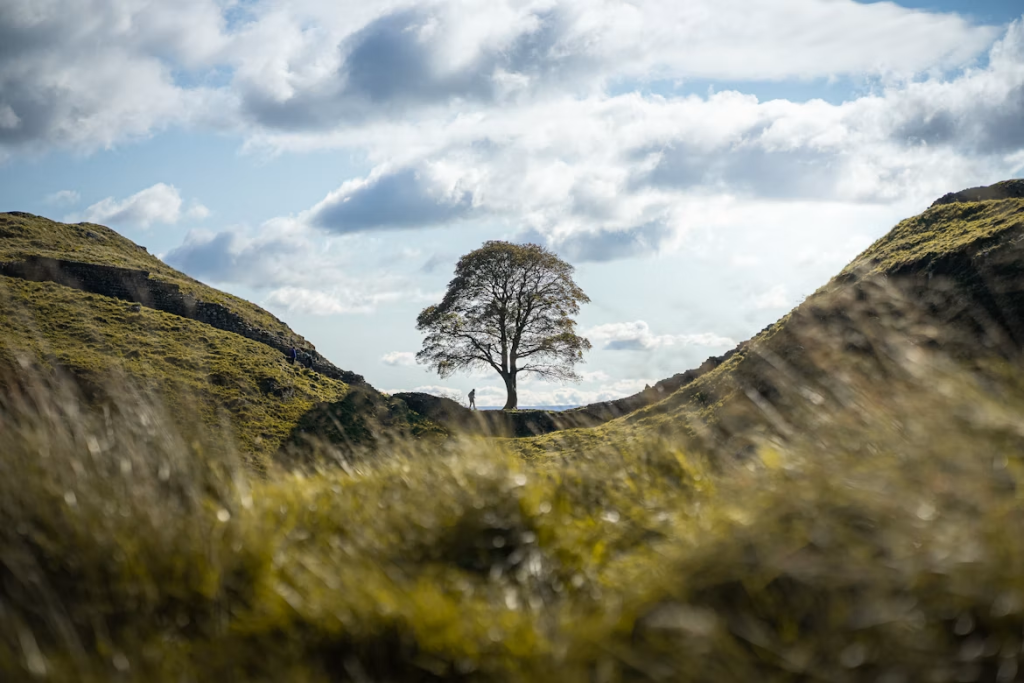
There is a gentle lesson here for us as Christians. We are called to sow the seed of the gospel (Luke 8:11). Like that tree, we are not responsible for controlling where every seed lands or how every heart responds. Our role is to share—to speak, to live, to reflect the message of Christ wherever we can.
Sometimes we may feel discouraged when our efforts don’t seem to take root. A conversation that goes nowhere, an invitation declined, a kind word that seems unnoticed. But just like those seeds in the grass, we often cannot see what God is doing beneath the surface. As Paul reminds us, “I planted, Apollos watered, but God gave the increase” (1 Corinthians 3:6).
Another encouraging text is a reminder from Ecclesiastes: “In the morning sow your seed, and in the evening do not withhold your hand; for you do not know which will prosper” (Ecclesiastes 11:6). We simply don’t know which seed will take root—and that’s okay.
So the next time you see seeds carried along by the wind, remember the quiet work of God. Keep sowing. Keep sharing. Keep living faithfully. Some seeds may rest unseen for a time, but in God’s providence, they can grow into something far greater than we imagined.
